
Why Rust for Research?
whoami
- Alex Coleman
- Research Software Engineer in IT Services
- Background in cell biology, then data science, now software engineering
- Software Sustainability Institute Fellow 2023 looking at software security
- Languages I’m into: Python🐍, Rust🦀, R®
What this talk is
- An introduction to the Rust language and its features
- A perspective on why it could be a good language for research
- Some thoughts on why it might not be the right language for your research
What this talk is not
- A deep dive into the language
- A comprehensive comparison of Rust and other languages
- A call for you to write everything in Rust
What is Rust?
- Compiled programming language that came out of Mozilla
- Designed with an emphasis on security, peformance and usability
- Initially popular for systems based programming but very flexible
Features
- Memory safety
- Speed
- Strongly and statically typed
- Zero cost abstractions
- A helpful compiler
- Modern toolchain
Features: Ownership and borrowing
- System by which Rust manages memory and avoids common issues
- Rules of ownership:
- Each value must have an owner
- Can only be one owner at a time
- When the owner goes out of scope, the value is dropped
Ownership and borrowing (cont.)
- When passing data to a function we pass ownership to that function
- Sometimes we don’t want data to go out of scope after being used in a function, so we borrow it with a reference
- Compiler checks these references via the borrow checker
Fearless Concurrency
- This ownership model extends to writing concurrent code
- The compiler works to guarantee against data races in concurrent code
- Using threads still requires us to be careful but the compiler protects against common issues
No NULL type
- Lots of programming languages have a NULL or None type
- This means we often have to remember to test if something is
None
- Rust uses an optional type and forces you to handle the
Nonecase
No NULL type (cont.)
- Take this example in R
- But if I give an option no enumerated
No NULL type (cont.)
- Rust won’t compile this without the final catch-all arm
What is great about Rust?
The toolchain
- Rustup, toolchain installer and manager
- Cargo, build system and package manager
- crates.io, package repository
- Clippy, Rust linter
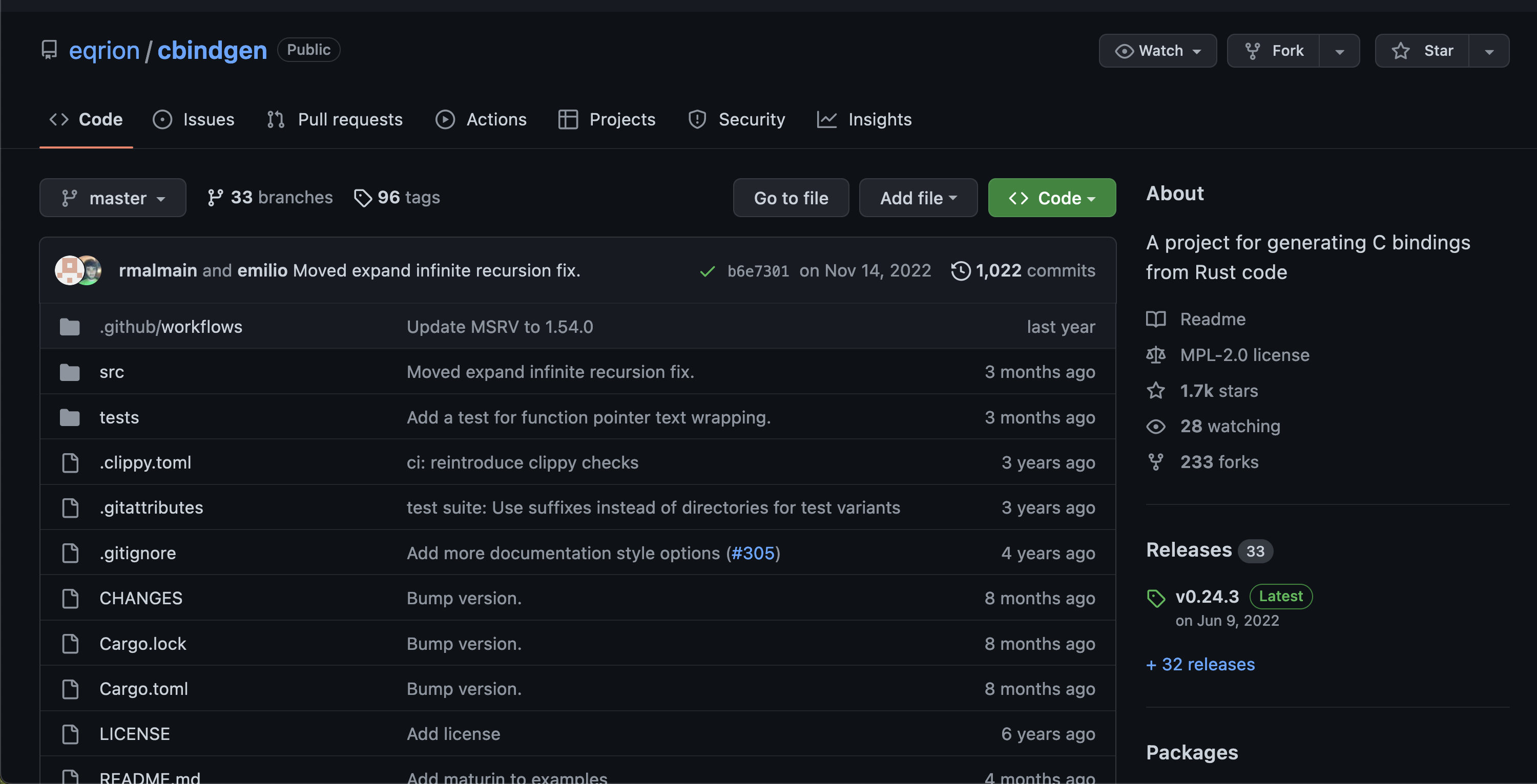
A little Rust in your… C
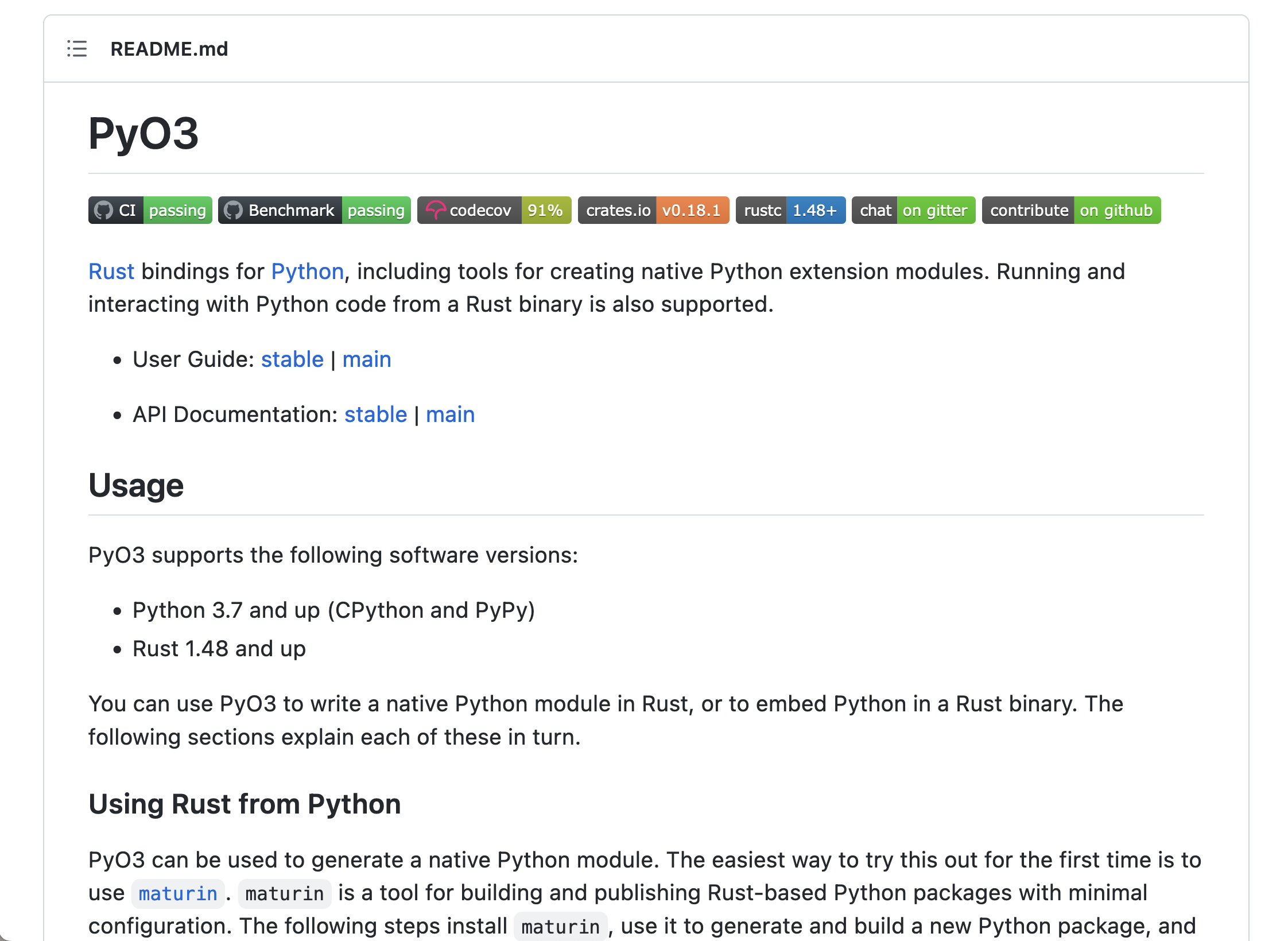
A little Rust in your… Python
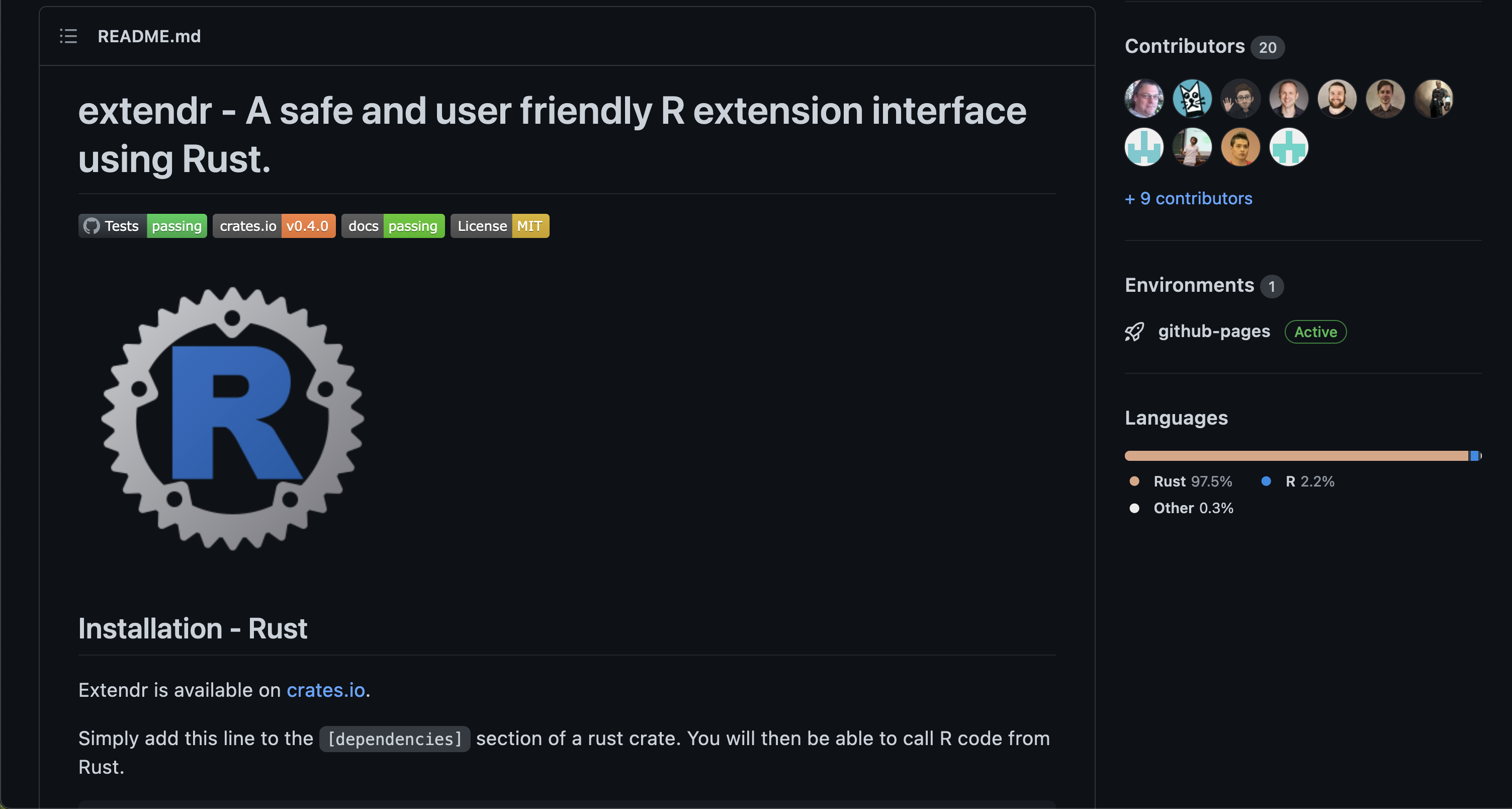
A little Rust in your… R
The community
What is not so great about Rust…
error[E0382]: borrow of moved value: `hard`
 --> src/main.rs:4:26
  |
2 |     let hard = String::from("Rust is hard");
  |         ---- move occurs because `hard` has type `String`, which does not implement the `Copy` trait
3 |     let size = count_length(hard);
  |                             ---- value moved here
4 |     println!("{}: {:?}", hard, size);
  |                          ^^^^ value borrowed here after move
  |
note: consider changing this parameter type in function `count_length` to borrow instead if owning the value isn't necessary
 --> src/main.rs:8:20
The compiler
- People often describe “fighting with the borrow checker”
- The strictness of the compiler can be infuriating
- Is slow compared to C and C++
Bounds checking
- To avoid buffer overflow Rust implements bounds checking when indexing arrays
- This adds an overhead at runtime
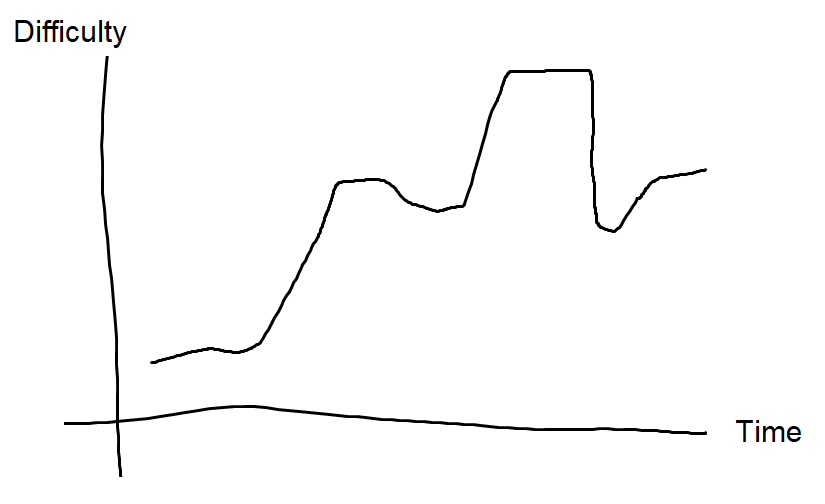
The learning curve
Rust for research?
- The toolchain makes it easy to distribute code
- Great for performance critical code
- Lots of resources to help learn
- Better resource use means greener🌳
Already happening
- Pola.rs, high performance data frame library written in Rust
- ndarray, n-dimensional array crate
- bio crate, implements a number of bioinformatics algorithms in Rust
- Status of Rust support for machine learning
- Rust MPI bindings
- GPGPU support
Do I have to rewrite it in Rust?
No…
Why Rust might not be for your research?
- Learning the language is hard
- Is the tradeoff of safety v. speed-of-development worth it?
- Is writing Rust sustainable in your research field/group?
- Lacks the interactive programming experience of Jupyter/Rmarkdown
Thanks for listening
Your next steps
- Go read the Rust book
- Try out Rustlings
- Check out The New Rustacean podcast
- Exercism Rust track